
See the Problem for Yourself
That means when deciding which schools to fix first, 65% of the decision is based on factors that have nothing to do with how likely kids are to be hurt or killed in an earthquake.
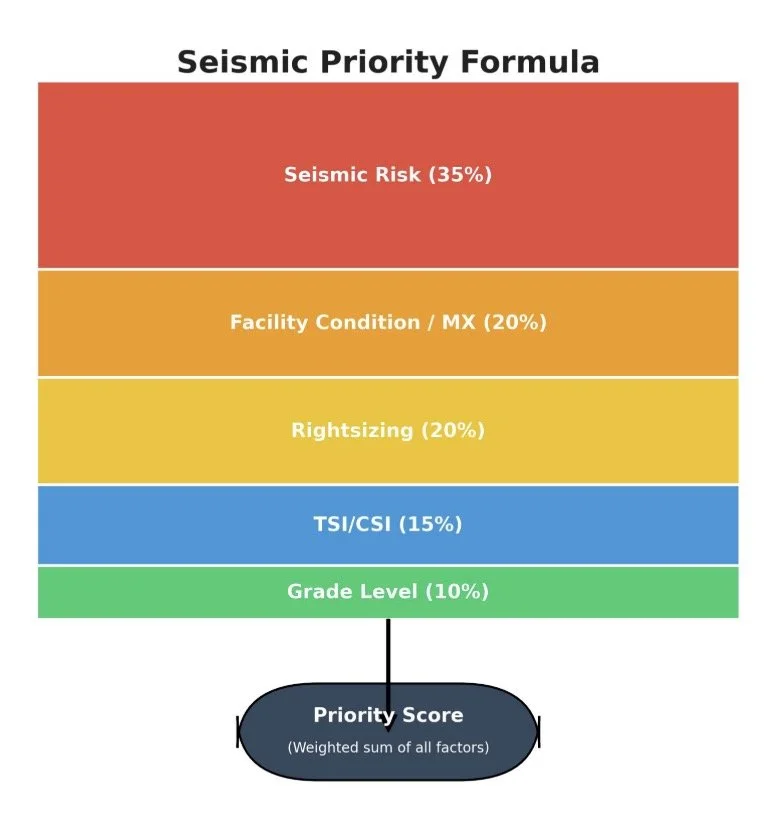
This calculator lets you compare two hypothetical schools to see how the formula works—and why it fails our kids.
Try It: Compare Two Schools
Enter the scores for two different schools and watch what happens.
A school with a 9.9 seismic risk score is substantially more dangerous than a new building with a 1.0
But under this formula, a school with 9.9 risk can easily be pushed below a 1.0 risk school simply because it scores lower on less meaningful measures like grade level, enrollment projections, "right-sizing”, or academic performance.
The 35% weighting means that real, engineer-assessed life-safety differences get drowned out by other priorities.
Why This Matters
In 2024, voters passed a bond specifically for seismic safety. Board Resolution 7109 clearly states that funds should go to "schools assessed to pose the greatest risk of injury or death in a significant seismic event."
But this formula doesn't follow that mandate. We must apply what resources we have to our most dangrous buildings. They can not be skipped over because they're they are “wrong" by other metrics that do not measure their mortal risk.
After a major earthquake, we need to know we used our resources to save the most lives possible—not to check boxes on other priorities.
What You Can Do
Use this calculator to understand how the formula works
Share it with other parents and community members
Contact the PPS Board and demand they prioritize actual seismic risk
Show up to school board meetings and ask tough questions
When structural engineers tell us one building is significantly more dangerous than another, that should be the deciding factor. It does not matter to the kids inside if there is deferred maintenance, or what the academic progress was. It needs to be primarily driven by our ability to save lives.

